The Era of “Vibe Coding”: Why Programming is Becoming a Creative Art Form
>> AI Knowledge Base>> The Era of “Vibe Coding”: Why Programming is Becoming a Creative Art Form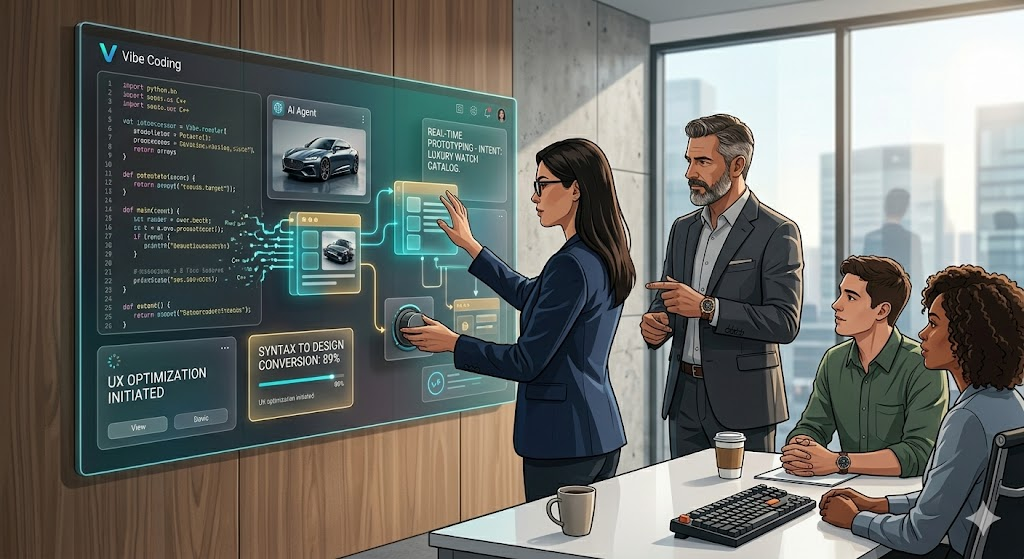
The Era of “Vibe Coding”: Why Programming is Becoming a Creative Art Form
For decades, learning to build software or launch a digital product required mastering complex coding syntax, debugging broken lines of code, and dedicating thousands of hours to understanding specific programming frameworks.
But as we cross into mid-2026, the tech industry is experiencing a profound paradigm shift. The world has officially entered the era of “Vibe Coding.”
Major tech announcements—from Microsoft’s debut of reasoning models like MAI-Code-1-Flash to Google’s specialized agent courses—show that the competitive landscape is rapidly evolving. The core barrier to entry for digital creation has been shattered. The shift is clear: we are moving entirely away from “writing code” to “expressing intent.”
What Exactly is “Vibe Coding”?
Coined to describe a highly intuitive way of building software, “Vibe Coding” refers to a workflow where a creator focuses strictly on the vision, user experience, and logic of an application, while leaving the entire execution to specialized AI agents.
Instead of typing thousands of lines of JavaScript or Python, creators describe exactly what they want in plain language or simple visual mockups. You “vibe” with the AI, directing the overall flow and aesthetics, while autonomous systems work behind the scenes to write, test, and instantly deploy the software.
Essentially, the human role has transformed from being a construction worker to being an architect and creative director.
Why It’s Changing the Game for Non-Technical Creators
For designers, marketers, entrepreneurs, and artists, this shift represents absolute creative liberation. Historically, an incredible idea for a customized web platform, a niche mobile app, or an automated digital tool was often shelved due to the high cost of development or technical limitations.
In 2026, that bottleneck is gone. Vibe coding allows you to:
- Prototype at the Speed of Thought: You can build, test, and completely overhaul a working application layout in a matter of hours instead of months.
- Focus Purely on Aesthetics and UX: Because you aren’t bogged down by syntax errors, you can spend your energy perfecting user interfaces, visual design, and brand identity.
- Iterate Continuously: Want to change a feature or add an entirely new section to an existing tool? You simply speak or type the request, and the system self-assembles the update dynamically.
The Industrial Realities of 2026
This isn’t just a fun trend for hobbyists; it is fundamentally altering how tech organizations operate. As software becomes self-healing and autonomous, the traditional definition of technical talent is being rewritten.
A recent report by the Linux Foundation highlights that while AI is actually driving overall IT job growth, organizations are heavily prioritizing upskilling and orchestration. The modern premium is no longer placed on mechanical coding speed, but on creative logic, data privacy oversight, and high-level project management.
How to Leverage the Vibe Shift
If you are running a website, a digital catalog, or a boutique brand, the lesson of 2026 is simple: don’t let technical limitations hold back your creative vision. The tools available today are designed to understand your intent.
The next big digital product won’t be defined by who wrote the cleanest backend code, but by who had the most compelling, beautiful, and user-centric vision.
Related Post
Popular AEO (Answer Engine Optimization) Tools in 2026
AEO tools help businesses optimize content for AI-powered answer engines such as ChatGPT, Gemini, Claude,…